A Practical Guide to AI Art Styles (and the Prompts Behind Them)
AI art styles aren't just genres — they're prompt modifiers your model can summon. A field guide to the families that work, with copy-ready prompt templates.


Search "AI art styles" today and you get a thousand listicles and a hundred Pinterest boards. What you almost never get is the thing that actually makes a style usable: a clear sense of how a style word lives inside a prompt, why it behaves differently across models, and how to combine it with subject, medium and modifiers without ending up with a generic AI look. That is what this field guide is for.
We will start with a small but important distinction — why "AI art styles" are not the same thing as "art styles" — then move into the prompt mechanics, work through a curated library of the families that actually behave well in current models, and finish with a three-step studio workflow, a section on mixing styles, and a brief, honest note about naming living artists. By the end you should be able to look at any reference image, decode the style into a prompt, and ship it.
What an AI art style really is
In the art-history sense, a style is a property of an object — a Monet hangs in a museum and the brushwork is right there on the canvas. In the AI sense, a style is a property of a prompt. The pixels do not exist until you ask for them, and the words you choose shape what the model retrieves from its training distribution. "Impressionist" is not living in the model the way it lives in a textbook; it is a cluster of associated images, captions and tags that the model learned to group together. When you type the word, you are calling that cluster.
This sounds pedantic, but it changes how you write prompts. Three practical consequences fall out of it. First, some "AI art styles" only exist in the AI canon — isometric 3D render, synthwave, low-poly, vaporwave collage, "Studio Ghibli style." These are essentially internet-native genres that the models learned from labels rather than from formal art history. Second, some classical styles are quietly redefined by the models — what a current model considers "impressionist" is closer to a smoothed, average impressionist mood than to any specific painter. Third, the strength of any style word depends on how densely it was tagged during training; that is why the same prompt can produce very different results across Midjourney, GPT Image 2, Nano Banana and FLUX.
A style is not a property of the image. It's a modifier in the prompt — and the model only knows what it was taught to call by that name.
Once you internalise this, the problem reframes. The question stops being "what art styles exist?" and becomes "which style words does this model respond to reliably, and how do I anchor them so the result does not drift?" That is the question the rest of this guide tries to answer.
How styles connect to your prompt
Every prompt that produces a recognisable image has, explicitly or implicitly, four layers: the subject (what is in the frame), the medium (what it is made of — photograph, oil paint, 3D render, ink wash), the style (the visual dialect — cinematic, impressionist, cyberpunk, isometric) and the modifiers (lighting, palette, lens, mood, framing). The style word does not stand alone. It interprets the medium, and the modifiers interpret the style. A prompt that names only a style and a subject — "a cat, Studio Ghibli style" — usually returns a generic cluster average. A prompt with all four layers — "a cat sitting on a windowsill, Studio Ghibli style watercolor, soft afternoon light, pastel palette, wide film frame" — returns a specific picture.
Three ways to write a style word
There are roughly three syntaxes for naming a style in a prompt, each with a different trade-off. Named styles ("synthwave," "isometric 3D render," "manga ink") are the strongest single-word call to a known cluster and the easiest to control. Artist anchors ("in the style of Hokusai," "after Caravaggio") are powerful but blunt; they collapse a whole career into an average and carry ethical weight when the artist is alive. Descriptive phrases ("loose ink wash with washed ochre and indigo, mid-century editorial feel") are slower to write, but they age better, transfer between models, and avoid both the cluster-average problem and the living-artist problem. In practice, the best results usually come from a named style anchored by one or two descriptive modifiers.

Common ways to break the prompt
- Stacking too many style words. "Cyberpunk cinematic noir oil painting" averages itself into a muddy mid-style with no identity.
- Repeating the medium. "Oil painting in the style of an impressionist photograph" sends the model two contradictory mediums; it picks one and ignores the other.
- Forgetting the modifiers. A style word without a palette, light direction or lens hint produces the model's default reading — usually the most over-trained version of that style.
- Naming a style and then negating it. "Watercolor, but very crisp and detailed" fights itself. If you want crisp and detailed, pick a different style.
The AI art style library
The styles below are organised into five families. Each family groups styles that share a medium and a kind of light, which is what really matters when you are prompting. For each style, you get a one-line description, a short note on when it earns its place, and a copy-ready prompt template you can fork. Replace the bracketed slots and you have a working prompt.
Photographic & realistic
The default family. These styles look like photographs and survive any context, which is why ecommerce, editorial, and portrait work lives here. They demand the most discipline about light direction and lens detail, because once the viewer reads "photo," small inconsistencies become obvious.
- Cinematic. Wide aspect, anamorphic flare, motivated light, slight teal-orange grade. Use for hero frames and emotional storytelling. Template: "[subject], cinematic photograph, anamorphic 35mm, motivated warm light from screen-left, soft contrast, shallow depth of field, 2.39:1 frame."
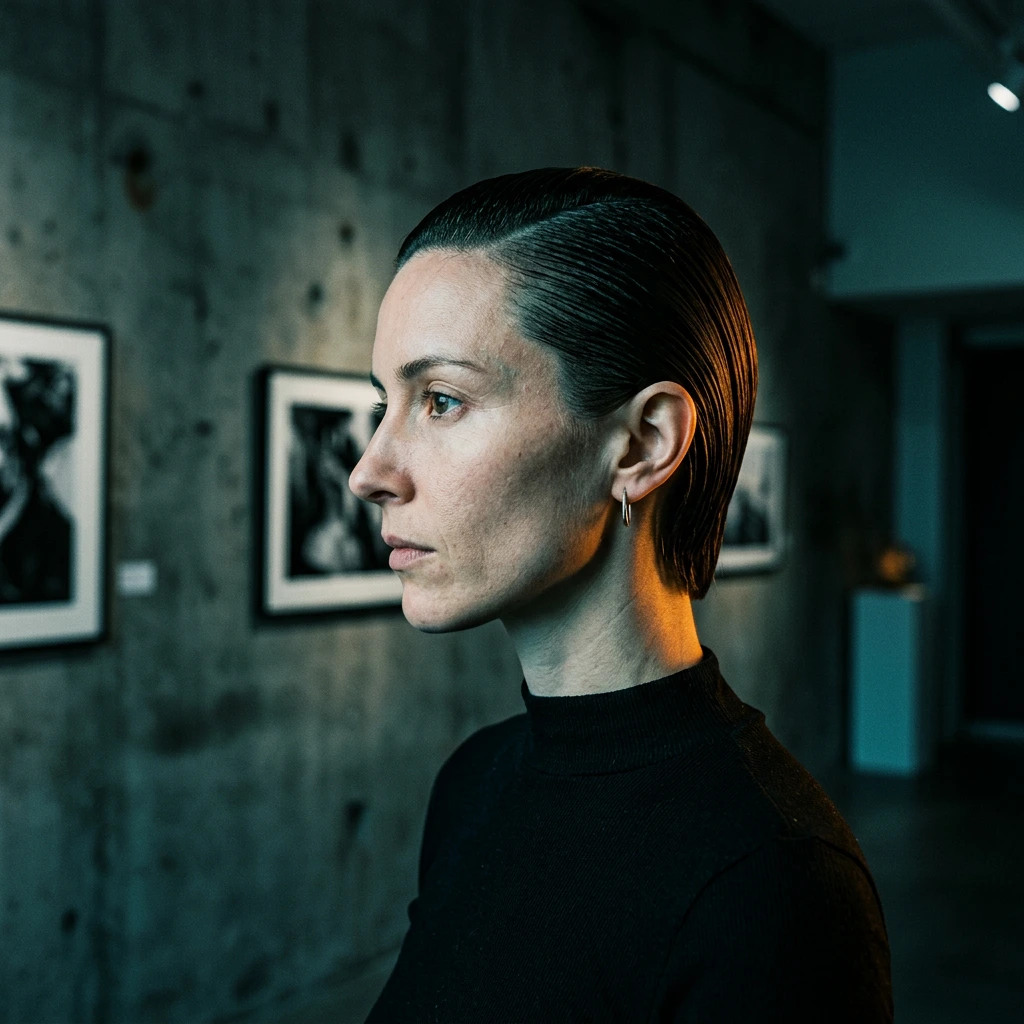
- Editorial portrait. Magazine-style face, soft top light, neutral backdrop. Use for founder photos, profile pages, About pages. Template: "[subject], editorial portrait, soft north-window light, 85mm, neutral warm-grey backdrop, faint film grain."
- Product studio. White or seamless backdrop, true colour, generous negative space. The workhorse for PDP images. Template: "[product], clean studio packshot on seamless background, soft top light with reflector fill, true colour, negative space at top for headline."
- Documentary. Available light, slight imperfection, candid framing. Use for brand stories and human-centred campaigns. Template: "[scene], documentary photograph, available light, candid moment, 35mm, mild colour cast, no flash."
- Analog film. Halation, soft grain, lifted blacks, slightly off colour science. Use to soften an otherwise digital scene. Template: "[subject], shot on Portra 400, soft halation around highlights, lifted blacks, fine film grain."
Illustration & anime
These styles trade realism for emotion and legibility at small sizes. They are excellent for thumbnails, app marketing, children's content and anything that needs to feel warm rather than accurate.
- Studio Ghibli style. Soft watercolor, pastel sky, gentle linework, hand-painted backgrounds. Template: "[subject], Studio Ghibli inspired watercolor, soft pastel palette, painterly clouds, warm afternoon light, gentle linework."
- Modern anime. Cleaner cel shading, saturated highlights, sharper line. Template: "[subject], modern anime cel shading, crisp lineart, vibrant highlights, soft rim light."
- Manga ink. Black-and-white, screentone, dynamic line weight. Template: "[subject], black-and-white manga panel, dynamic ink lineweight, screentone shading, high contrast."
- Children's book. Warm gouache, simple shapes, generous margins, friendly expressions. Template: "[subject], children's picture book illustration, gouache on textured paper, warm muted palette, friendly characters."
- Flat vector. Geometric shapes, limited palette, no shading. Use for UI illustrations and tech marketing. Template: "[subject], flat vector illustration, geometric shapes, three-colour palette (#... #... #...), no gradient, no shading."
Painting & traditional media
Painting styles bring obvious emotional weight, which is useful when a photograph would feel too literal. They are also the family most prone to AI smoothing — be specific about brush behaviour or you'll get a generic "painterly" average.
- Oil painting. Visible impasto, thick paint, warm light. Template: "[subject], oil painting, visible impasto brushwork, warm chiaroscuro lighting, limited earth-tone palette."
- Watercolor. Wet-on-wet bleeds, paper texture, transparent layers. Template: "[subject], loose watercolor on cold-press paper, wet-on-wet bleeds, soft pastel washes."
- Gouache. Matte opacity, posterised light, mid-century travel-poster feel. Template: "[subject], gouache illustration, flat opaque colour, mid-century travel poster aesthetic."
- Impressionist. Broken brushwork, optical colour mixing, outdoor light. Template: "[subject], impressionist oil painting, broken brushwork, dappled outdoor light, optical colour mixing."
- Ukiyo-e. Flat colour planes, bold outline, traditional Japanese woodblock composition. Template: "[subject], ukiyo-e woodblock print, flat colour planes, bold dark outline, indigo and ochre palette."
3D & graphic
The native AI canon. These styles are nearly always well-trained because they are heavily tagged in modern datasets — they tend to be the most reliable styles to prompt, and the easiest to keep on-brand across a series.

- Isometric 3D. Tilted view, clean geometry, soft pastel light, miniature feel. Template: "[subject], isometric 3D render, soft pastel palette, warm rim light, neutral backdrop, miniature scale."
- Claymation. Tactile clay surfaces, slight fingerprints, stop-motion warmth. Template: "[subject], claymation character, visible fingerprints in clay, soft top light, tilt-shift miniature feel."
- Low-poly. Faceted geometry, flat shading, limited palette. Template: "[subject], low-poly 3D render, flat shading, four-colour palette, simple geometric facets."
- Pixar-style render. Plush characters, soft global illumination, expressive eyes. Template: "[subject], stylised 3D character render, soft global illumination, warm cinematic palette, expressive eyes."
- Paper craft. Layered cut-paper, soft shadow, handmade imperfection. Template: "[subject], paper craft scene, layered cut paper, soft directional shadow, handmade imperfection."
Stylized & contemporary
Styles built for attention. They survive on small screens, they read instantly in a feed, and they signal a point of view. Use them where the cost of being ignored is higher than the cost of being polarising.

- Cyberpunk. Neon signage, wet streets, high contrast, dense detail. Template: "[subject], cyberpunk street scene, neon signage reflected in wet asphalt, high contrast, cinematic 35mm."
- Synthwave / vaporwave. Magenta–cyan gradient, grid horizon, 1980s VHS poster. Template: "[subject], synthwave poster, magenta to cyan gradient sky, grid horizon, palm tree silhouettes, 1980s VHS aesthetic."
- Brutalist poster. High-contrast type blocks, single saturated accent, structural grid. Template: "[subject], brutalist editorial poster, heavy black type blocks, single hot accent colour, structural grid layout."
- Risograph. Limited spot inks, slight misregistration, paper grain. Template: "[subject], risograph print, two spot inks (fluorescent pink and blue), slight misregistration, visible paper grain."
- Y2K collage. Chrome type, glossy gradients, mixed media, optimistic chaos. Template: "[subject], Y2K collage, chrome typography, glossy gradient backgrounds, mixed media, optimistic chaos."
How to use a style in practice
Every style above behaves the same way once you know the workflow. Three steps, in order — and the order matters more than the specific style you pick.
Step 1 — Pick the family that matches the job
Start from the goal, not the look. PDP images and product renders want the photographic family. App marketing and children's content want the illustration family. Editorial emotion wants painting. Tech marketing and game pitches want 3D. Social campaigns want stylised. Forcing a style from the wrong family is the single most common reason a nice image performs badly in context.
Step 2 — Build a four-part prompt
Once the family is chosen, write the prompt in four explicit layers: subject, medium, style, modifiers. Two or three modifiers are enough — palette, light direction, and either lens or texture. More modifiers make the model average. Fewer make it generic. The four-part shape forces you to make every word do work.
Step 3 — Iterate one variable at a time
The mistake here is rewriting the whole prompt every generation. Change one variable per iteration: swap the light direction, change the palette, tighten the lens. After three or four cycles you will know which variable is carrying the image and which is decoration. That is the moment to lock the prompt and start generating crops.
Mixing styles (and when not to)
Some styles stack well. Some collapse. The pattern is easier to feel than to formalise, but a useful rule of thumb: styles that share a medium can usually be combined; styles that disagree about the medium cannot. Cinematic photograph plus analog film grain works because both live in the photographic family. Watercolor plus ink line works because both are painted. Photoreal plus flat vector does not work — one says "real surface," the other says "no surface." The model picks one and discards the other, usually badly.
When you do mix, use the 70/30 rule. One style carries the frame at full strength; the second appears as a single modifier — a palette cue, a texture, a line treatment. Avoid 50/50 mixes. They average. The point of mixing is not to split the difference between two looks; it is to take one clear look and tilt it slightly.
Style ≠ artist name
It is technically easy to type a living artist's name into a prompt and get something close to their work. It is rarely a good idea. The legal status varies by jurisdiction and is actively being litigated; the ethical status is clearer — you are using someone's career as a free style preset. For any commercial work, the safer and more durable move is to describe the style instead of naming the person. "Loose ink-wash portrait, washed indigo and ochre, mid-century magazine feel" is not only ethically cleaner, it gives the model more useful constraint than a name does.
Historical figures (Hokusai, Vermeer, Caravaggio) are a softer area, and traditions or schools (Bauhaus, Art Nouveau, Ukiyo-e, Fauvism) are safer still — they describe a movement rather than a person. As a default, prefer movements over names, and descriptions over movements when you can. The work ages better, transfers between models, and stays usable when policies change.
The best AI art style prompts read less like a wishlist and more like a brief: one subject, one medium, one style, two modifiers — every word doing a job.
That is, in the end, what separates a copy-pasted style word from an image that feels intentional. The library above gives you the vocabulary; the four-part prompt shape gives you the grammar; the 70/30 mixing rule keeps the writing clean. Pick a family, write four layers, change one variable at a time, and ship. The styles are ready when you are.
AI art style questions, answered
What's the difference between a style and a medium?
A medium is what the image is made of — oil paint, photograph, 3D render, ink. A style is the visual dialect on top of that medium — impressionist oil, editorial photograph, isometric 3D, manga ink. In a prompt, you almost always want both: the medium gives the model a surface to imitate, and the style narrows down what that surface should look like.
Why does the same style prompt look different across models?
Each model is trained on a different dataset and tags styles with different keyword density. "Studio Ghibli style" in one model leans on Spirited Away frames; in another it leans on fan art. Treat the style word as a request, not a guarantee, and add 2–3 descriptive modifiers (palette, lighting, line quality) so the result is anchored even if the model's interpretation drifts.
Can I reproduce an exact artist's style?
Technically often yes — practically and ethically, no. Naming a living artist raises real legal and moral concerns and your output may be unusable for commercial work. Prefer descriptive substitutes: era, school, technique, palette, line quality. "Loose ink wash with limited ochre and indigo, mid-century editorial feel" beats naming a person, and it ages better.
How many style words should I use in one prompt?
One primary style and at most one secondary modifier. Stacking three or four style words usually averages them out into a generic AI look. The 70/30 rule is a good default: pick a dominant style that carries the frame, and add one supporting modifier that nudges palette or texture.
Which AI art style is best for product images, portraits, or social posts?
Product images: editorial studio photography or product render — clean, true-to-life, neutral light. Portraits: cinematic photography or oil painting if you want emotion over realism. Social posts: bold styles that survive thumbnails — synthwave, flat vector, risograph, isometric 3D. The right answer is always "the style your audience already recognises in the feed."
Try it yourself on Vofy
Generate AI images and videos with the best models - all in one studio.
Discover More
 Ryan Mitchell•
GPT Image 2 Product Photos for a Mother's Day Campaign
Plan a Mother's Day ecommerce campaign with GPT Image 2 product photos, from white background packshots and gift sets to banners, email, and social ads.

 Alex Harper•
Mother's Day AI Image Ideas for Cards and Gifts
Explore Mother's Day AI image ideas for cards, gifts, portraits, and photo edits that turn family memories into personalized visuals in minutes.
 Ryan Mitchell•
How to Write Better GPT Image 2 Prompts
Learn a reusable framework for GPT Image 2 prompts across photos, products, portraits, posters, and social graphics, with real examples and clearer control.